
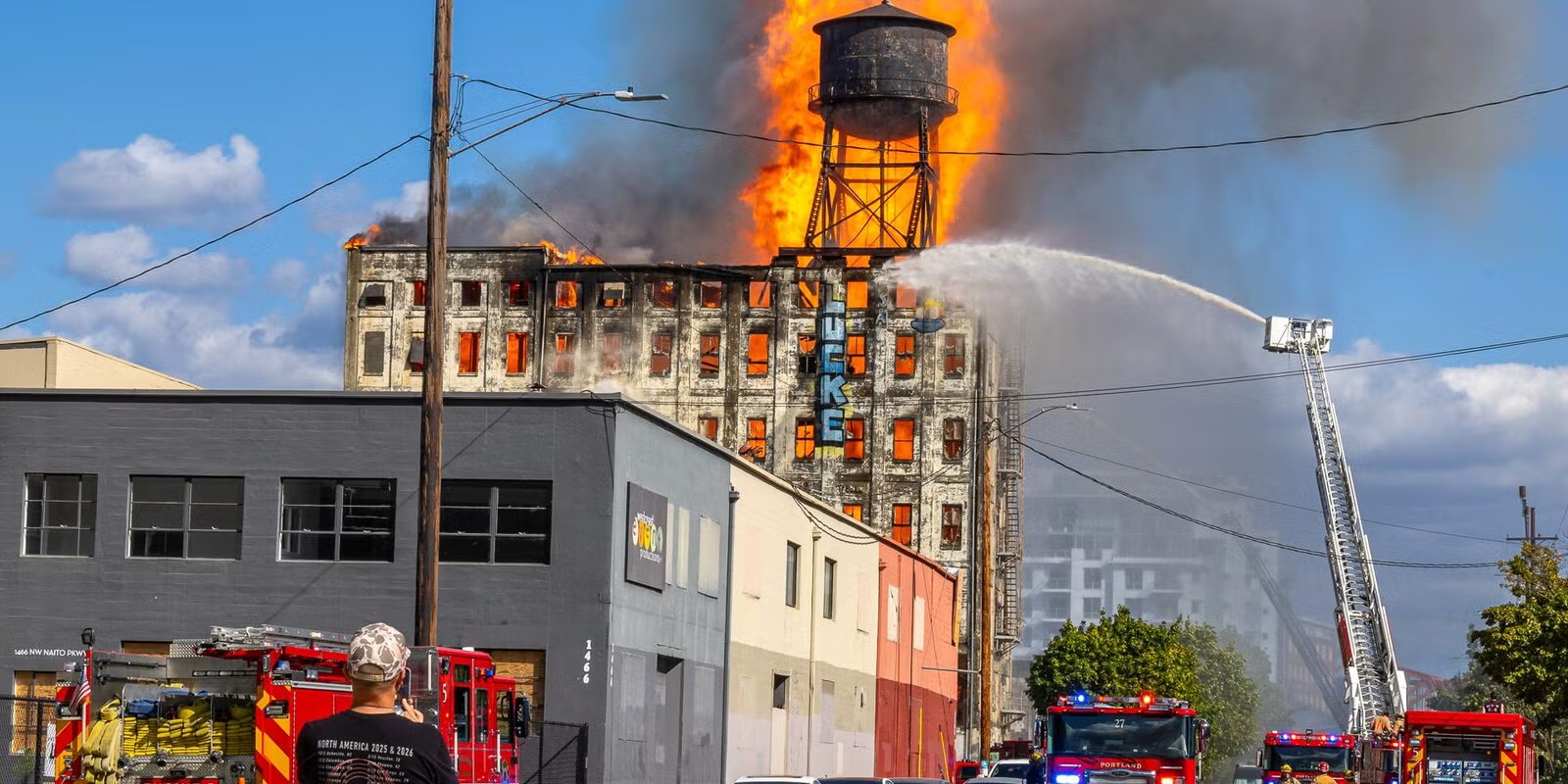
Press release of the Centennial Mills fire incident:
https://www.portland.gov/emergency/centennial-mills-fire
What happened?
On Sunday, Aug. 2, Portland Fire & Rescue responded to a fire in the 1300 Block of NW Naito Parkway at the Centennial Mills building. The incident became a four-alarm fire. Nearly 100 firefighters arrived on scene to address the emergency. Firefighters brought the blaze under control after two hours.
Each floor of the 116-year-old, 8-story disused warehouse collapsed in the fire.
Due to multiple reports of leaning walls, the instability of the heavy steel water tower structure on the roof, and the fire damage, there are concerns about the building’s structural integrity. There is a risk that the building could collapse.
The warehouse remains an active investigation site, with multiple agencies involved.
Safety perimeter
Portland Fire & Rescue (PF&R) has established a safety perimeter to protect public health and safety in the event of a building collapse. The perimeter may change as the situation develops.
For your safety, obey the posted closure signs and barrier tape.
What’s open and what’s closed?
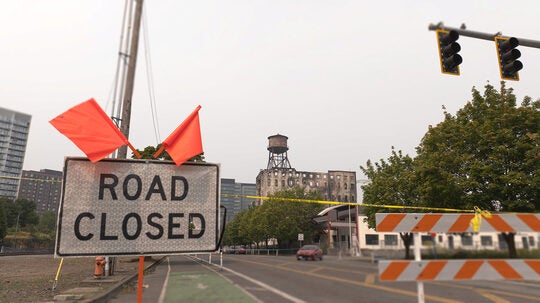
NW Naito Parkway is closed from 9th to 15th avenues.
Some roads, parks, and railways in the neighborhood are temporarily closed due to the risk that the building could collapse. City staff understand this is frustrating and disrupts people’s lives. However, we take these actions out of an abundance of caution to protect public health and safety.
The Fields Park is temporarily closed.
Northwest Naito Parkway is closed from Northwest 9th to 15th avenues to pedestrians, people biking, people driving, and transit. Do not bypass road closure signs. They are there for your own safety. Please follow detour signs to get to your destination. Visit www.trimet.org for bus service impacts.
Amtrak train service between Portland and Seattle is temporarily restricted. Trains between Seattle and Vancouver, BC, and trains between Portland and Eugene are running normally. Trains 506 and 517 will terminate in Vancouver, Washington. Amtrak is working to secure alternatives.
Will the warehouse be demolished? When?
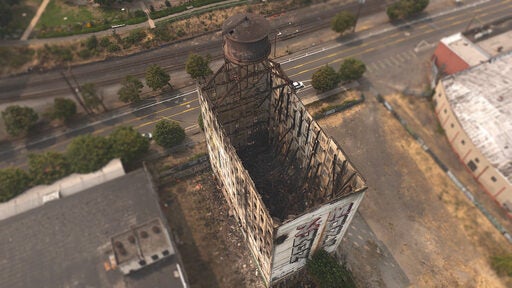
The Centennial Mills warehouse after the fire. The roof and all eight floors were consumed in the blaze. The building is at risk of collapse.
The City is working with the property owner to safely manage the eventual demolition of the building.
Demolition is a complex operation and takes time to plan. The building will be demolished when it is safe to do so. The City is in frequent contact with the building owner and has issued a dangerous building notice that requires action on the part of the building owner.
Assuming it is still standing, we expect a controlled demolition may begin to take place in the coming weeks.
What about air quality and debris?
The City of Portland has been working with our partners at the United States Environmental Protection Agency (EPA), Oregon Department of Environmental Quality (DEQ), Oregon Health Authority (OHA) and Multnomah County Public Health to monitor air quality and debris.
Preliminary results indicate that air contaminant levels measured outside the immediate fire area do not pose a significant health risk to the surrounding community. Additional sampling and laboratory analysis are underway to confirm these findings.
Because the warehouse was constructed more than a century ago, the building contained asbestos and likely contained other hazardous materials commonly used in older industrial buildings.
Records show that extensive asbestos abatement was completed in previous years, but not all asbestos was removed from the structure before the fire. Asbestos-containing materials were damaged during the fire and debris samples have tested positive for asbestos. However ongoing air monitoring suggests potential exposure to asbestos from the air to nearby residents and the broader community is low.
What is asbestos?
Asbestos is a mineral fiber. When inhaled as dust over many years, it can increase the risk of cancers of the lung and lining of the lung.
Asbestos mainly affects the lungs and the lining that surrounds the lungs. Breathing high levels of asbestos fibers for a long time may result in scar-like tissue in the lungs and in the lung lining. This disease is called asbestosis and is found in workers who are frequently exposed to asbestos.
Breathing asbestos over many years can increase the risk of cancer in people. There are two types of cancer caused by long-term exposure to asbestos: lung cancer and mesothelioma. Mesothelioma is a cancer of the thin lining surrounding the lung or abdominal cavity. Cancer from asbestos generally does not develop immediately but shows up after several years.
For more information about asbestos and health, see the CDC’s Agency for Toxic Substances and Disease Registry’s ToxFAQs in English and Spanish.